
E-oci-card
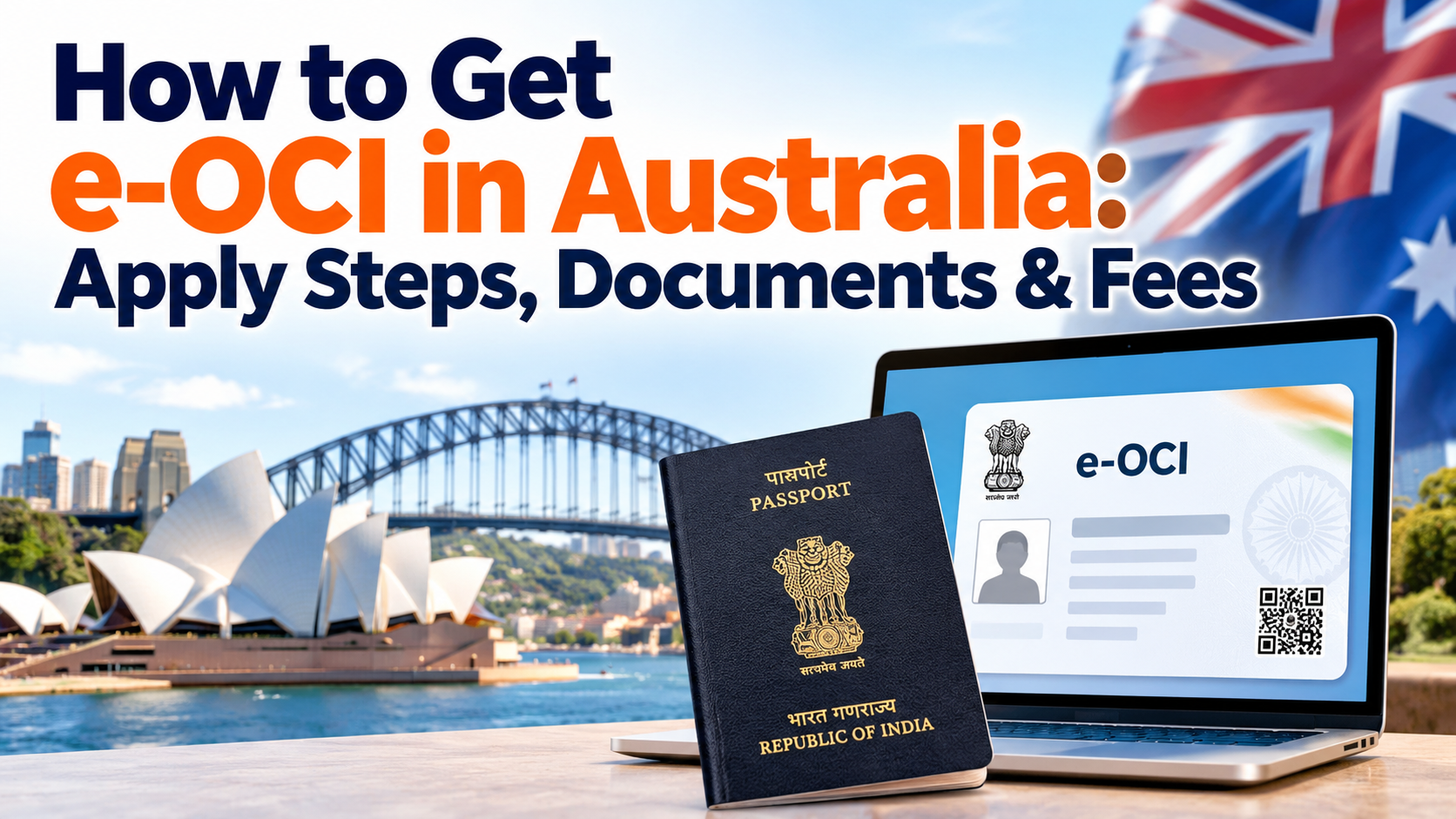
How to Get e-OCI in Australia: Apply Steps, Documents & FeesHow to Get e-OCI in Australia: Apply Steps, Documents & Fees
Written by Anil

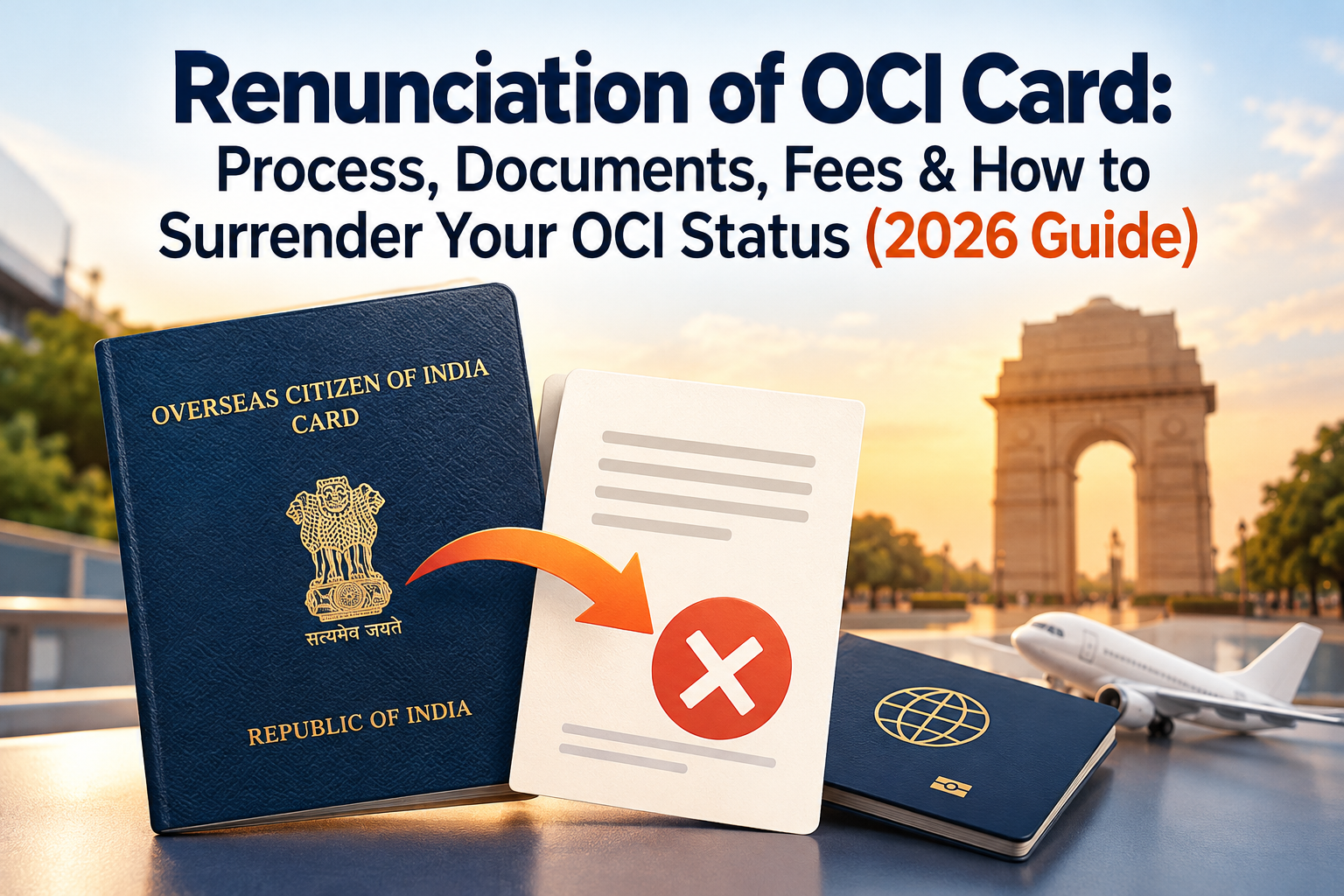
If you are an Overseas Citizen of India (OCI) cardholder and no longer wish to retain your OCI status, you can formally surrender your registration through the Government of India's prescribed process. This procedure is known as OCI renunciation.
With the introduction of the electronic OCI (e-OCI) system, applicants can now access their OCI registration digitally. The government has also provided an electronic process for submitting a declaration to give up this status.
However, before proceeding, it is important to understand the eligibility requirements, application procedure, supporting documents, applicable fees, and consequences of surrendering your registration.
In this guide, we explain everything you need to know about the process in 2026, including the latest e-OCI-related provisions.
Renunciation of OCI is the formal process through which an existing Overseas Citizen of India cardholder voluntarily gives up their OCI registration.
Under the Citizenship Act, 1955, an eligible adult OCI cardholder can submit a declaration to the Indian authorities expressing their intention to surrender their registration.
Once the declaration is registered by the competent authority, the individual ceases to be an OCI cardholder and can no longer use the privileges associated with that status.
For example: Suppose an individual originally obtained an OCI card because of their Indian ancestry but later decides that they no longer wish to retain this registration. They can apply to surrender their OCI status through the prescribed procedure.
Important: This process is different from surrendering Indian citizenship or an Indian passport. OCI cardholders are foreign citizens and do not hold Indian citizenship merely because they possess an OCI registration.
There can be several reasons why an individual may decide to surrender their registration:
They no longer wish to maintain their OCI status.
They have personal or family circumstances that make continued registration unnecessary.
They want to formally discontinue their existing OCI registration.
They are dealing with a situation involving their family members' OCI registrations and need to understand the applicable legal requirements.
Renunciation is a voluntary decision in ordinary cases. Applicants should understand its consequences before submitting the declaration.
The process is intended for individuals who already hold valid OCI registration and voluntarily want to surrender it.
Generally, an applicant must:
Be an existing OCI cardholder.
Have the details of their existing OCI registration.
Provide the passport details linked to their registration.
Complete the prescribed declaration.
Submit the required supporting information and documents.
Special considerations apply when a minor is registered as an OCI cardholder.
According to the government provisions, when a parent renounces their OCI registration, the spouse of foreign origin who obtained OCI through that person and every minor child registered under that person may also cease to be OCI cardholders.
Therefore, parents should carefully review the consequences for their children before submitting the declaration.
For minor applicants, parental authorization and additional documentation may be required depending on the applicable procedure.
Although both processes result in the loss of OCI status, they are not the same.
| Basis | Voluntary Renunciation | Government Cancellation |
|---|---|---|
| Who initiates it? | OCI cardholder | Government of India |
| Reason | Personal decision to surrender status | Legal or regulatory grounds |
| Application | Declaration submitted by applicant | Government-initiated action |
| Result | OCI registration ceases after registration of declaration | OCI registration is cancelled by the competent authority |
Renunciation is initiated by the cardholder, whereas cancellation is an action taken by the government under applicable legal provisions.
Yes. The Government of India provides an online OCI portal for submitting the prescribed declaration.
The introduction of e-OCI has made the registration and document-access process more digital.
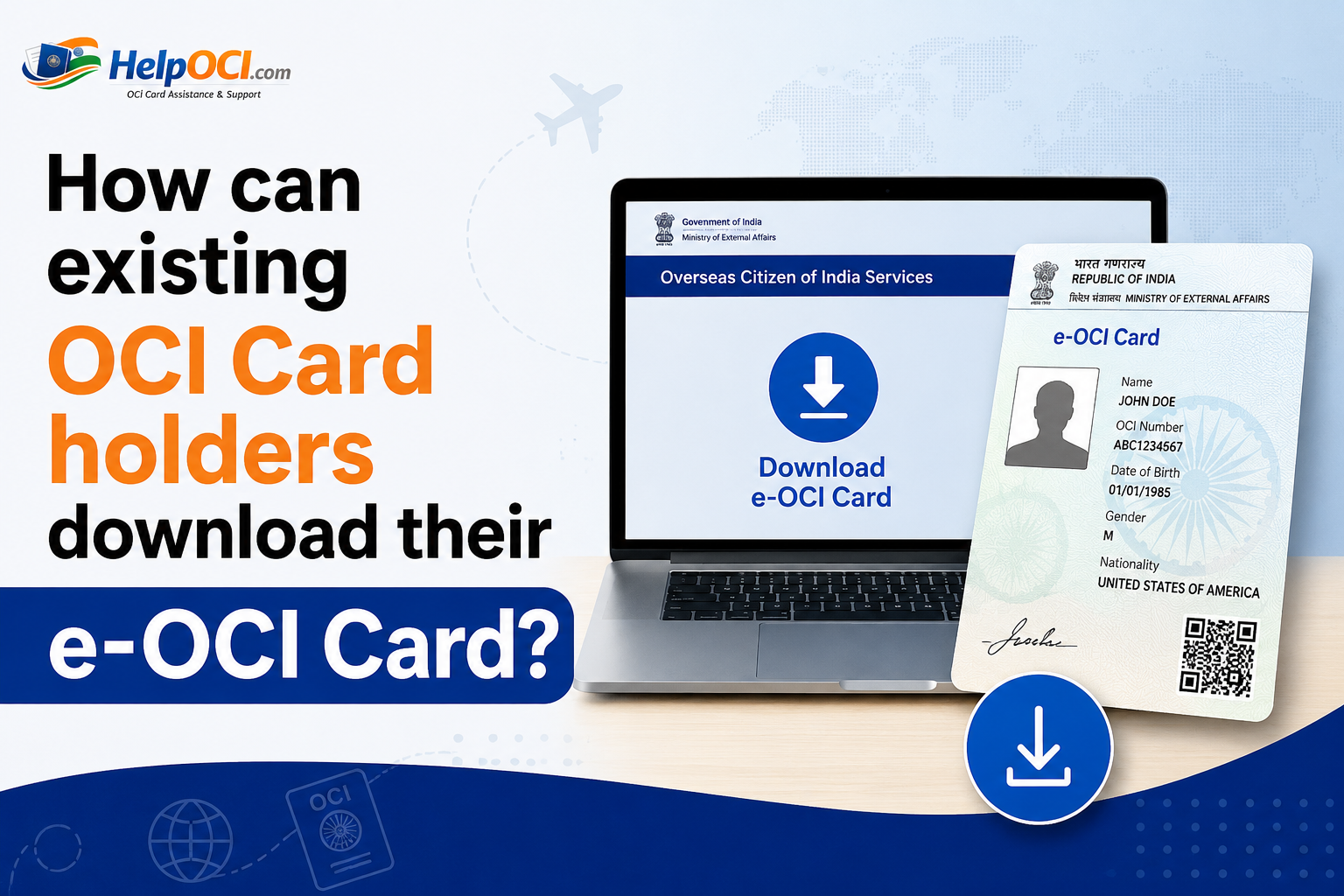
The e-OCI card is the electronic version of the OCI registration issued by the Ministry of Home Affairs.
Existing cardholders can log in to the official portal and access their electronic registration.
The updated system also provides for electronic submission of a declaration for surrendering e-OCI registration.
The process includes:
Submitting the declaration electronically through the OCI portal.
Receiving an electronic acknowledgment from the concerned Indian Mission, Post or FRRO.
Invalidating the registration in the central database after the request is processed.
Receiving the renunciation certificate through the prescribed system.
The electronic system does not mean that every supporting-document or physical-submission requirement has disappeared. Applicants must follow the instructions applicable to their country and jurisdiction.
Before beginning the application, prepare the necessary documents.
The exact checklist can vary depending on the applicant's country of residence, age and the instructions issued by the concerned Indian Mission or authorized service provider.
Commonly requested documents include:
Provide your existing OCI card details or electronic registration information to identify your current registration.
A copy of your current valid foreign passport is generally required to verify your identity and nationality.
A recent photograph in the prescribed digital format may be required while completing the online application.
A scanned signature may be required for the online declaration.
Applicants applying from a country where they are not citizens may need to provide proof of their legal residence, such as a residence permit, visa or permanent resident card.
Where a minor is involved, parental authorization and relevant identity documents may be required.
The concerned authority may request additional documents depending on the applicant's circumstances.
Note: Do not assume that a single document checklist applies worldwide. Always check the latest requirements for your country before submitting the application.
The application process generally involves an online declaration followed by the applicable verification and submission requirements.
Visit https://ociservices.gov.in/ and access the OCI Services Portal.
Use your existing registration details to identify your OCI record.
After accessing the portal, navigate to the OCI Miscellaneous Services section.
Locate the option for renouncing your existing OCI registration.
Provide the information requested in the application, including:
Existing OCI registration details.
Passport number linked to the OCI record.
Applicant's personal information.
Other required particulars.
Ensure that the details match your existing records.
Fill in the prescribed declaration and carefully review the information before submitting it.
Incorrect personal details or mismatched passport information can lead to additional verification or delays.
Upload the photograph, signature and supporting documents in the formats and file sizes specified by the portal.
Make sure that all uploaded documents are clear and readable.
Pay the government fee and any additional charges applicable to your country.
Depending on the jurisdiction, payment may be collected through the online portal or the authorized service provider.
Follow the instructions issued by the concerned Indian Mission, Post or FRRO.
Depending on your location, you may need to submit a printed application, original OCI booklet and supporting documents through an authorized service provider.
For example, applicants in the United States should follow the applicable VFS Global checklist and submission instructions.
After the declaration is processed and registered, the competent authority issues the prescribed acknowledgment.
Under the e-OCI procedure, the acknowledgment can be issued electronically, and the renunciation certificate is sent to the concerned individual.
The registration is then invalidated in the central database.
The government fee for surrendering an OCI registration is prescribed under Schedule IV of the Citizenship Rules, 2009.
The government fee is:
US $25 or an equivalent amount in local currency.
However, the final amount payable can differ depending on the applicant's country because authorized service providers may charge additional fees.
According to the published VFS Global fee schedule for the United States:
| Fee Component | Amount |
|---|---|
| Government OCI Renunciation Fee | $25 |
| Indian Community Welfare Fund (ICWF) | $3 |
| VFS Service Fee | $19 |
| Total | $47 |
Additional payment convenience charges, courier expenses or other applicable charges may apply.
Applicants should verify the latest fee schedule before making payment.
Refund eligibility depends on the applicable rules and the stage at which the application is withdrawn or rejected.
Check the relevant payment and refund instructions before submitting your application.
The processing time depends on the applicant's country, the completeness of the application and the verification requirements of the concerned authority.
Factors that can affect processing include:
Missing or incorrect documents.
Mismatched passport or registration details.
Additional verification requirements.
Delays in physical document submission, where applicable.
Processing workload at the concerned Indian Mission or FRRO.
There is no single processing timeline that applies to every country.
Applicants can follow the status through the official OCI portal or the authorized service provider, depending on the application route.
Keep your application reference number and payment confirmation available for future communication.
Giving up your OCI registration has important consequences.
Before submitting the declaration, understand what changes after the process is completed.
Once the declaration is registered, you cease to be an OCI cardholder.
You can no longer use OCI-specific benefits, including the lifelong multiple-entry visa facility associated with the registration.
Yes. After your OCI status ceases, you will generally need an appropriate Indian visa or other valid travel authorization to visit India, depending on your nationality and circumstances.
You should arrange the required travel permission before planning a visit.
If minor children were registered as OCI cardholders under the parent who renounces their registration, they may also cease to hold OCI status under the applicable provisions.
Parents should review this carefully before submitting the declaration.
A person who has surrendered their previous registration should not assume that they can automatically restore it.
Any future application would be assessed under the eligibility requirements and procedures in force at that time.
Contact the concerned Indian Mission or FRRO if you are considering applying again.
Applicants should avoid the following mistakes:
These are separate procedures. An OCI cardholder who is already a foreign citizen does not surrender an Indian passport merely because they are giving up OCI status.
Make sure the passport number and personal information match the existing OCI records.
Missing photographs, signatures or supporting documents can delay processing.
Submission procedures and service-provider requirements can differ between countries.
A parent's decision may affect children registered under their OCI record.
Once the declaration is registered, the applicant ceases to be an OCI cardholder. Review the consequences before proceeding.
No. An existing OCI cardholder does not generally have to surrender their registration simply because they are not using it. Renunciation is a voluntary process unless a specific legal situation requires otherwise.
The government provides an online facility for submitting the declaration. However, additional document verification or physical submission may still be required depending on your jurisdiction.
The prescribed government fee is US $25 or the equivalent amount in local currency. Additional service-provider and other charges may apply.
Requirements depend on the applicable country-specific instructions and the type of registration held. Check whether the concerned authority requires the original physical booklet or accepts electronic registration details.
Yes. The updated government system provides an electronic declaration process for surrendering e-OCI registration through the official portal.
Yes. Once the declaration is registered, the competent authority issues the prescribed acknowledgment and renunciation certificate through the applicable process.
You should not assume that your previous registration can be restored automatically. Any future application will be subject to the applicable eligibility rules and government approval.
No. OCI renunciation means giving up an existing foreign-citizen OCI registration. Indian passport surrender applies to individuals who have ceased to be Indian citizens after acquiring foreign citizenship.
Planning to give up your OCI registration? The application process involves completing the prescribed declaration, preparing supporting documents and following the requirements of the concerned Indian Mission or FRRO.
If you are unsure about the paperwork or application procedure, professional assistance can help you prepare your application correctly.
HelpOCI can assist you with:
Understanding the application requirements.
Preparing the document checklist.
Reviewing your application details.
Providing form-filling and document-upload assistance.
Guiding you through the applicable submission process.
Helping you understand application-status updates.
Ready to start your application? Contact Us
Note: This guide is for information purposes only. HelpOCI or the author will not be responsible for any direct or indirect loss incurred by the reader for taking any decision based on the information or the contents. It is advisable to consult a qualified professional for guidance based on your exact situation.
Anil is an NRI documentation and immigration specialist at HelpOCI, a trusted platform dedicated to simplifying OCI, PAN, Visa, Passport, and NRI-related services for applicants worldwide. With extensive expertise in Indian consular services, overseas documentation, OCI applications, PAN card services, visa assistance, passport renewals, and NRI compliance, Anil is committed to making complex government procedures easier to understand and navigate. By combining in-depth research with official government guidelines, Anil creates practical, accurate, and easy-to-follow resources that help applicants complete their documentation confidently and efficiently See Full Bio
Get reliable support for every step, whether it's form filling or final submission.




Want to read more? Explore Blogs

Comments