
What Does TIN Mean in PAN Card? How to Apply for a TIN Number?

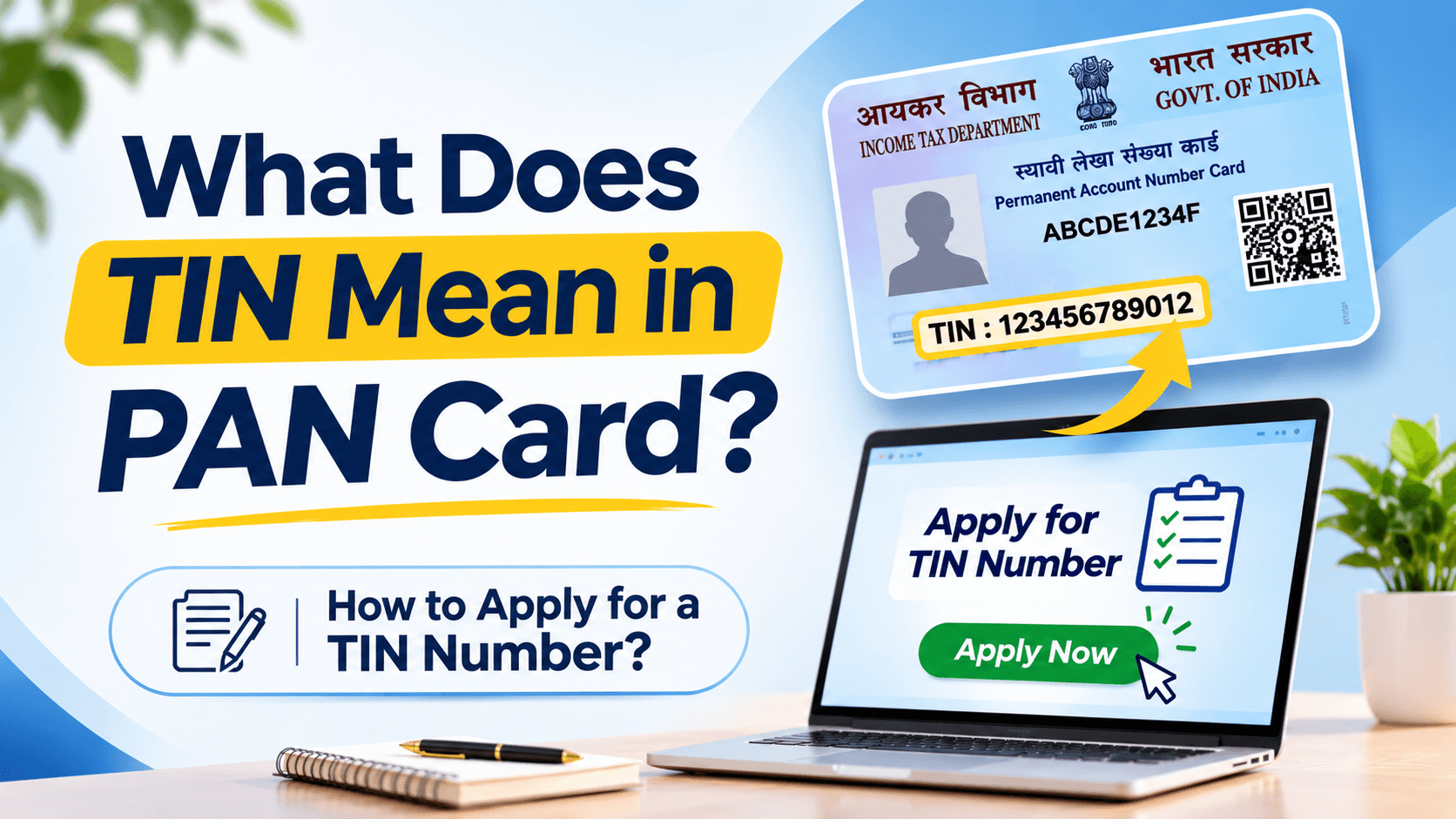
Have you ever come across the term TIN while applying for a PAN Card and wondered what does it actually means and how to find a TIN number? So, here’s the quick answer: TIN stands for Taxpayer Identification Number which is a number used by tax authorities to identify taxpayers. In India, PAN is the primary taxpayer identification number for income tax purposes.
However, if you are an NRI or foreign applicant applying for PAN, you may be asked to provide your TIN from your country of residence. TIN can also refer to India's Tax Information Network, which is a different concept.
A Quick Overview
TIN simply means Taxpayer Identification Number, a tax ID. For most people in India, that ID is the PAN you already have or can apply for online. There is also an older, business-only TIN, an 11-digit number given by state tax departments under VAT, which GSTIN replaced from July 2017.
So how do you get one?
- ✓ Individuals: Apply for a PAN. That is your TIN.
- ✓ Businesses: Register for GST and get a GSTIN.
- ✓ NRIs and foreigners: Use the tax ID issued in your country of residence.
Need a PAN Card as an OCI or PIO Cardholder?
Apply for your Indian PAN card online with HelpOCI. Get assistance with your application and required documents.
Start Your PAN Application →What Does TIN Mean in PAN Card?
TIN stands for Taxpayer Identification Number. It's a unique number tax authorities use to know who is paying tax, and every country has its own version. In India, that job is done by your PAN (Permanent Account Number), a 10-character code issued by the Income Tax Department. So when a form asks for your TIN, Indian residents simply give their PAN.
Is TIN the Same as PAN in India?
TIN and PAN are related, but they are not exactly the same. TIN is a general term used internationally, while PAN is India's specific taxpayer identification number.
|
Parameter |
TIN |
PAN |
|
Full Form |
Taxpayer Identification Number |
Permanent Account Number |
|
Purpose |
Identifies taxpayers globally (or state-level VAT dealers in India) |
Identifies taxpayers for income tax in India |
|
Usage |
Varies by country; used for international tax reporting and non-GST state taxes |
Used for Indian income tax returns, banking, and high-value transactions |
|
Issuing Authority |
Depends on the country (or State Commercial Tax Dept. in India) |
Income Tax Department, Government of India |
In short, PAN is India's taxpayer identification system, and TIN is the broader term. If you're an Indian individual applying for PAN, you don't need a separate TIN application.
Why Is TIN Required?
Whether you are filling out a banking KYC form, updating PAN details, or registering a business, TIN serves as the backbone of tax transparency. When a PAN application or bank form asks for a "TIN," it is usually asking for your country-specific tax ID (your PAN in India, or a foreign tax ID if you are an NRI/foreign citizen).
Here's why it matters:
-
One identity: it gives you a unique number in the tax system.
-
Tracking: tax authorities can match your income, spending, and investments to you.
-
Filing and payments: it is needed to file returns and pay tax.
-
International Tax Compliance: Banks and financial institutions require your TIN under global standards (FATCA/CRS) to verify where you pay taxes and prevent cross-border tax evasion.
-
Business invoices: under the old VAT system, a business had to quote its TIN on invoices and returns. GSTIN does this job now.
Why you see TIN in forms: when a PAN, KYC, or account-opening form has a TIN box, it is asking for your tax ID. Indian residents enter their PAN. NRIs and foreign citizens enter the tax ID of the country where they live.
How to Apply for TIN Number?
How you apply depends on who you are. There is no single "TIN application" anymore.
If You're an Individual: Apply for PAN
Your PAN is your TIN. It is issued by the Income Tax Department, and applications are handled by Protean (NSDL) or UTIITSL.
-
Open the official Protean or UTIITSL PAN website.
-
Choose the new PAN application for Indian citizens.
-
Fill in your name, date of birth, and address.
-
Verify with Aadhaar OTP or upload the required documents.
-
Pay the fee online and save your acknowledgement number.
Apply for Your PAN Card
Getting your Indian PAN card doesn't have to be complicated. Let HelpOCI guide you through the application process with expert assistance.
Apply Now →If You Run a Business: Register for GST
Earlier, businesses also used to get a TIN but now they have to get a Valid GSTIN. Here's how to apply for that
-
Go to the GST portal and open New Registration.
-
Enter your PAN, mobile number, and email, and verify the OTPs.
-
Fill in your business details and upload the documents.
-
Verify with Aadhaar or e-sign, and submit.
-
Note your ARN to track the application. The GSTIN is issued after approval.
To Apply for a NRI PAN Card, Check this Guide: https://helpoci.com/blogs/pan-card-for-nris?
Old VAT TIN
This was issued by state commercial tax departments, but dealers were moved to GST from 1 July 2017. So you can't apply for a fresh VAT TIN now.
If You're an NRI or Foreigner
Get your TIN from the tax authority of the country where you are a tax resident.
Documents Required to Apply for TIN
Keep these ready depending on your route. The business list follows the official GST registration checklist.
For a PAN (individuals):
-
Proof of Identity (Aadhaar Card, Voter ID, Passport, etc.)
-
Proof of Address (Aadhaar Card, Passport, Driving Licence, etc.)
-
Proof of Date of Birth (Birth Certificate, Passport, Matriculation Certificate, etc.)
-
Recent passport-size photograph (where physical submission is applicable).
-
A mobile number and email ID for OTPs
For GST registration (businesses):
-
PAN Card of the business or proprietor.
-
Proof of Business Constitution (Certificate of Incorporation, Partnership Deed, etc.).
-
Identity and Address Proof of Promoters/Partners.
-
Proof of Principal Place of Business (Electricity Bill, Rent Agreement, Property Tax Receipt, etc.).
-
Proof of Additional Place of Business, if applicable.
-
Photograph of the Proprietor, Partners or Authorised Signatory, as applicable.
-
Identity and Address Proof of the Authorised Signatory.
-
Bank Account Details (Bank Statement or Passbook), where required.
-
Authorisation Letter or Board Resolution for the Authorised Signatory, where applicable.
List of State Codes for First Two Digits of TIN Numbers
The old VAT-era TIN was an 11-digit number, and its first two digits showed the state. These same two-digit state codes still start your 15-digit GSTIN today. The example numbers below are made-up samples, only to show the pattern.
|
Sl. No. |
State / UT Name |
TIN First 2 Digits |
State Code |
Example TIN |
|
1 |
Andaman and Nicobar Islands |
35 |
AN |
35XXXXXXXXX |
|
2 |
Andhra Pradesh |
28 |
AP |
28XXXXXXXXX |
|
3 |
Andhra Pradesh (New) |
37 |
AD |
37XXXXXXXXX |
|
4 |
Arunachal Pradesh |
12 |
AR |
12XXXXXXXXX |
|
5 |
Assam |
18 |
AS |
18XXXXXXXXX |
|
6 |
Bihar |
10 |
BH |
10XXXXXXXXX |
|
7 |
Chandigarh |
04 |
CH |
04XXXXXXXXX |
|
8 |
Chhattisgarh |
22 |
CT |
22XXXXXXXXX |
|
9 |
Dadra and Nagar Haveli |
26 |
DN |
26XXXXXXXXX |
|
10 |
Daman and Diu |
25 |
DD |
25XXXXXXXXX |
|
11 |
Delhi |
07 |
DL |
07XXXXXXXXX |
|
12 |
Goa |
30 |
GA |
30XXXXXXXXX |
|
13 |
Gujarat |
24 |
GJ |
24XXXXXXXXX |
|
14 |
Haryana |
06 |
HR |
06XXXXXXXXX |
|
15 |
Himachal Pradesh |
02 |
HP |
02XXXXXXXXX |
|
16 |
Jammu and Kashmir |
01 |
JK |
01XXXXXXXXX |
|
17 |
Jharkhand |
20 |
JH |
20XXXXXXXXX |
|
18 |
Karnataka |
29 |
KA |
29XXXXXXXXX |
|
19 |
Kerala |
32 |
KL |
32XXXXXXXXX |
|
20 |
Lakshadweep Islands |
31 |
LD |
31XXXXXXXXX |
|
21 |
Madhya Pradesh |
23 |
MP |
23XXXXXXXXX |
|
22 |
Maharashtra |
27 |
MH |
27XXXXXXXXX |
|
23 |
Manipur |
14 |
MN |
14XXXXXXXXX |
|
24 |
Meghalaya |
17 |
ME |
17XXXXXXXXX |
|
25 |
Mizoram |
15 |
MI |
15XXXXXXXXX |
|
26 |
Nagaland |
13 |
NL |
13XXXXXXXXX |
|
27 |
Odisha |
21 |
OR |
21XXXXXXXXX |
|
28 |
Pondicherry |
34 |
PY |
34XXXXXXXXX |
|
29 |
Punjab |
03 |
PB |
03XXXXXXXXX |
|
30 |
Rajasthan |
08 |
RJ |
08XXXXXXXXX |
|
31 |
Sikkim |
11 |
SK |
11XXXXXXXXX |
|
32 |
Tamil Nadu |
33 |
TN |
33XXXXXXXXX |
|
33 |
Telangana |
36 |
TS |
36XXXXXXXXX |
|
34 |
Tripura |
16 |
TR |
16XXXXXXXXX |
|
35 |
Uttar Pradesh |
09 |
UP |
09XXXXXXXXX |
|
36 |
Uttarakhand |
05 |
UT |
05XXXXXXXXX |
|
37 |
West Bengal |
19 |
WB |
19XXXXXXXXX |
A few notes: Ladakh's code 38 is newer, so it only applies to GSTIN, not to old TINs. Daman & Diu and Dadra & Nagar Haveli are now one union territory, but both codes are still listed. Special GST codes 97 (Other Territory) and 99 (Centre Jurisdiction) are not states. Codes match the lists on Tally and IndiaFilings.
Is There a Difference Between a TIN and GSTIN?
Yes. The old TIN was an 11-digit number issued by state tax departments under VAT. GSTIN is the 15-character number under GST, which replaced VAT-era registrations from 1 July 2017.
|
Parameter |
TIN (old VAT-era) |
GSTIN |
|
Full form |
Taxpayer Identification Number |
Goods and Services Tax Identification Number |
|
Purpose |
Identifies taxpayers |
Identifies GST-registered businesses |
|
Length |
11 digits |
15-digit number |
|
Issued by |
State commercial tax departments |
GST system, through the GST portal |
|
Tax covered |
State VAT and related taxes |
GST |
|
State code |
First two digits |
First two digits |
Conclusion
TIN is an important term to understand when applying for a PAN card, especially if you are an NRI or foreign applicant. It stands for Taxpayer Identification Number and helps tax authorities identify taxpayers. In India, PAN serves as the primary taxpayer identification number for income tax purposes, so Indian residents generally do not need a separate TIN application.
However, NRIs and foreign applicants may need to provide their existing foreign TIN while applying for PAN, depending on the applicable form and their tax status.
We also discussed how TIN differs from GSTIN. Remember, GSTIN is a 15-digit business registration number, and its first two digits represent the state code. Understanding these differences can help you complete your PAN application more confidently and avoid confusion when tax identification details are requested.
Note: This guide is for information purposes only. HelpOCI or the author will not be responsible for any direct or indirect loss incurred by the reader for taking any decision based on the information or the contents. It is advisable to consult a qualified professional for guidance based on your exact situation.

Anil is an NRI documentation and immigration specialist at HelpOCI, a trusted platform dedicated to simplifying OCI, PAN, Visa, Passport, and NRI-related services for applicants worldwide. With extensive expertise in Indian consular services, overseas documentation, OCI applications, PAN card services, visa assistance, passport renewals, and NRI compliance, Anil is committed to making complex government procedures easier to understand and navigate. By combining in-depth research with official government guidelines, Anil creates practical, accurate, and easy-to-follow resources that help applicants complete their documentation confidently and efficiently See Full Bio
Get Reliable Support
Get reliable support for every step, whether it's form filling or final submission.




Want to read more? Explore Blogs

Comments